History
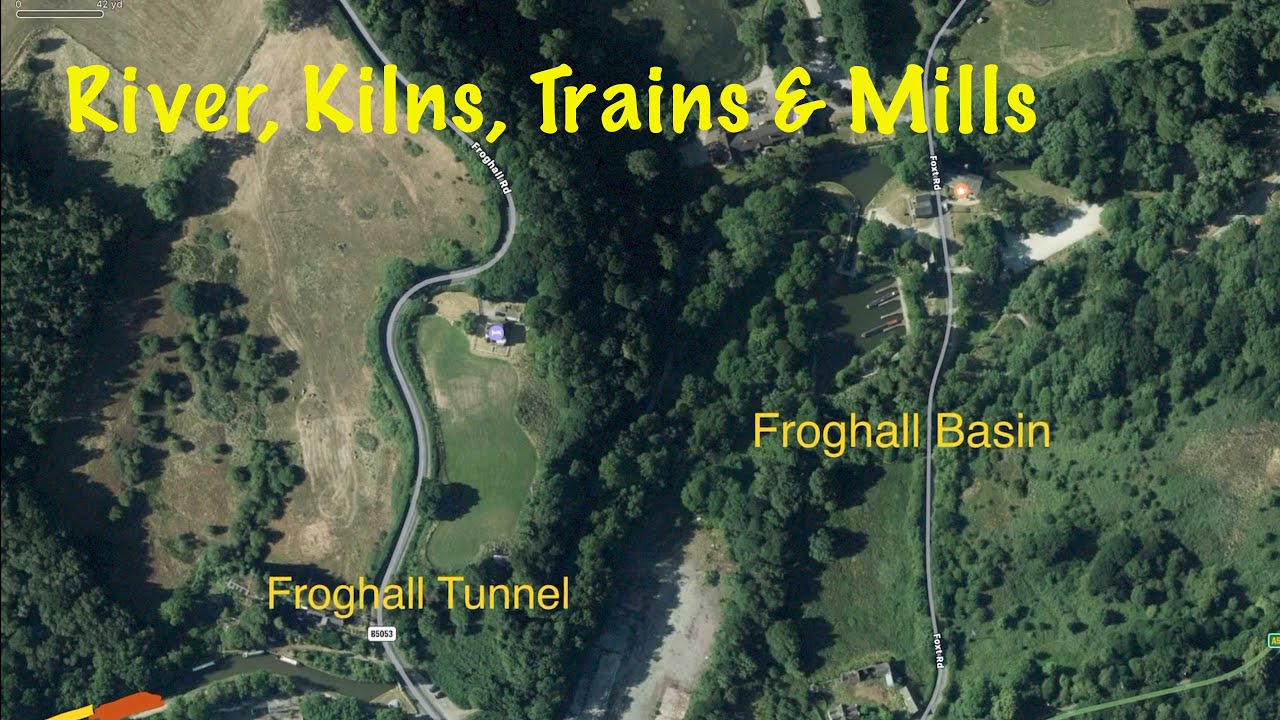
Froghall Wharf stands at the northern terminus of the Caldon Canal in Staffordshire, marking the point where canal transport met the limestone quarries and ironworks that drove the local economy for over a century. The Caldon Canal opened in 1779, engineered by James Brindley and completed after his death by Hugh Henshall, as a thirteen-mile branch from the Trent and Mersey Canal at Etruria. The canal’s primary purpose was to transport limestone from the quarries around Caldon Low and Cauldon, and by 1778 work had begun on extending the waterway north from Endon to reach the limestone-rich hills near Froghall. This final stretch opened in 1779, bringing narrowboats right to the foot of the quarries and transforming what had been a sparsely populated agricultural valley into an industrial settlement almost overnight.
The wharf itself grew rapidly as the transhipment point between boat and cart, then later between boat and tramway. In 1849, the North Staffordshire Railway opened a line from Leek to Waterhouses, with a branch that ran directly to Froghall Basin. This railway connection fundamentally changed the wharf’s role, turning it into a busy interchange where limestone, copper ore from Ecton Hill across the valley, and coal moved between three transport modes. The basin became surrounded by warehouses, lime kilns, stables, and workers’ cottages, creating a compact industrial hamlet that housed canal workers, railway employees, quarrymen, and their families. By the 1860s, Froghall Wharf was handling over 80,000 tons of cargo annually, with limestone heading south to the Potteries and beyond, whilst coal came north to fuel the kilns and local industries.
The working life of Froghall revolved around the narrow gauge tramway that climbed the steep hillside from the wharf to the quarries at Whiston and Cauldon. This horse-drawn tramway, later steam-powered, descended the gradient on a complex system of inclines, with loaded wagons pulling empty ones back up. Boatmen would tie up at the wharf and wait their turn to be loaded, often spending the night moored alongside the basin whilst limestone was tipped into their holds through wooden chutes. The wharf master controlled the flow of traffic, and his cottage still stands near the basin, a substantial brick building that speaks to the importance of his role. The Wharf Inn, which opened in the early nineteenth century, provided refreshment and accommodation for boatmen and quarry workers alike, its tap room often crowded with men who had worked the boats all day or laboured in the quarries above.
The twentieth century brought decline to Froghall as road transport took over from canals and railways. Commercial traffic ceased on the Caldon Canal in the 1960s, and the railway closed in 1965, leaving the wharf and basin abandoned and slowly being reclaimed by vegetation. The canal itself officially closed in 1961, but the Caldon Canal Society, formed in 1962, began campaigning for restoration. Their persistence paid off when British Waterways undertook restoration work through the 1970s, and the canal reopened to navigation in 1974. Froghall Wharf, however, remained largely derelict until more comprehensive restoration began in the late 1980s and through the 1990s. The Caldon and Uttoxeter Canals Trust took on the challenge of bringing the wharf back to life, clearing decades of accumulated debris and undergrowth.
Today, Froghall Wharf stands as one of the best-preserved examples of a canal-railway interchange in Britain. The basin remains in water, surrounded by restored buildings that now house the Churnet Valley Railway’s operations centre and a small museum dedicated to the waterway’s industrial past. The railway line itself has been restored by heritage railway enthusiasts, and steam trains once again run through the valley, though now carrying passengers rather than limestone. You can walk along the towpath and see the original stone wharves where boats were loaded, the arched entrance to the basin, and the route of the old tramway climbing the hillside opposite. The lime kilns that once burned constantly have been stabilised and interpreted, their bottle-shaped stone structures standing as monuments to the intensive industry that once filled this valley with smoke and activity.
The settlement around the wharf has survived as a tiny hamlet, with several of the original workers’ cottages still occupied. The Wharf Inn closed in the 1970s but the building remains, now converted to private use. The wharf master’s house is also a private residence, though its prominent position overlooking the basin makes its original function clear. The basin itself is regularly used by narrowboats, as Froghall marks the current northern limit of navigation on the Caldon Canal. Plans exist to extend navigation further north along the Uttoxeter branch, but for now, boats must wind and turn in the basin before heading back south towards Cheddleton and the Potteries. The sense of place here is powerful—standing by the water on a quiet morning, you can almost hear the shouts of boatmen, the rattle of tramway wagons descending the incline, and the clang of limestone being loaded into holds.
Location and Map
Photo Gallery


YouTube Gallery


Sources and Further Information
- Canal & River Trust – Official Caldon Canal information, moorings, and facilities
- Inland Waterways Association – Canal restoration projects and heritage preservation
- Historic England – Listed structures and industrial heritage conservation
- British History Online – Local industrial development and historical records
- National Archives – Original canal construction documents and trade records
- Heritage Gateway – Archaeological evidence and monument records
- Visit England – Tourism information and visitor facilities
- Canal Museum – Educational resources and canal history
- Waterscape – Walking routes, cycle paths, and activity guides
- Pennine Waterways – Regional canal network and heritage sites